
The science and the technology around NGTs: Keynote Speakers
The science and the technologies around New Genomic Techniques will be covered in a series of scientific sessions organized in specific topics (technologies and traits sessions) with a keynote speaker and selected talks from abstracts.
Topic specific sessions cover all crops and include:
- Session I: Technology ( NGTs technologies)
- Session II Traits: Yield
- Session III Traits: Quality
- Session IV Traits: Climate change: extreme Temperatures
- Session V Traits: Water and Nitrogen use efficiency and Salinity
- Session VI Traits: Disease and Pest resistance
- Session VII Other traits and crops
- Session VIII NGTs Legislation
- Session IX NGTs and IP topics
- Session X NGTs COMPANIES
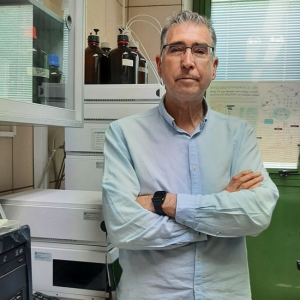
Francisco Barro
IES, CSIC, Spain
Professor, Institute for Sustainable Agriculture (IAS-
CSIC), Spain
His scientific interests focus on biotechnology applied to cereal improvement, with a particular emphasis on human health and agricultural sustainability. He developed low gliadin wheat using RNAi and genome editing technologies that are fit for celiacs.

Hiroshi Ezura
Tsukuba University, Japan
Professor of Plant Molecular Breeding, University of Tsukuba, Japan
Ezura’s work focuses on using advanced tools like CRISPR/Cas9 and Target-AID to improve the nutritional and agricultural traits of horticultural crops. A key figure in the global commercialization of genome-edited crops. He is best known for leading the team that developed the world’s first CRISPR edited food to enter the commercial market: the “Sicilian Rouge High GABA” tomato
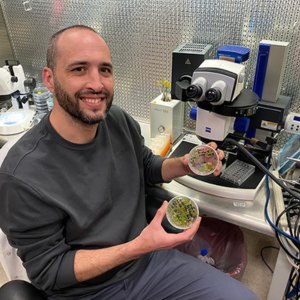
Juan Debernardi
UC Davis, USA
Ralph M. Parsons Foundation Plant Transformation Facility
UC Davis, CA, USA
His research is dedicated to overcoming major technological hurdles in crop genome editing, specifically focusing on increasing the speed and efficiency of plant regeneration. Debernardi’s most significant contribution is the development of a technology that uses developmental regulators to “boost” the plant’s ability to grow back from edited cells. He led the research that created a fusion protein (chimera) combining the growth-regulating factor 4 (GRF4) and its cofactor (GIF1). This discovery significantly improves the regeneration efficiency of wheat, rice, triticale, and citrus. It allows scientists to edit many “recalcitrant” varieties that were previously impossible to transform using standard methods.
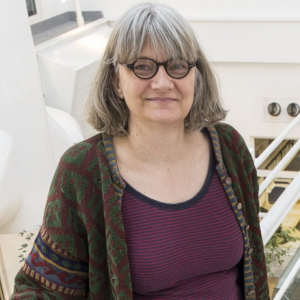
Cathie Martin
John Innes Center, Norwich, UK
Renowned for using genetic tools to turn everyday vegetables into “functional foods” that prevent chronic disease. Her most significant recent work involves using CRISPR-Cas9 to block a specific enzyme (Sl7-DR2) in tomatoes. This causes the fruit to accumulate high levels of provitamin D3. I n late 2025, her team launched the ViTaL-D study, the UK’s first human trial involving gene-edited food

Götz Hensel
Heinrich-Heine-Universität Düsseldorf
Head of the Centre for Plant Genome Engineering at Heinrich-Heine-University Düsseldorf, Germany.
Head of the Centre for Plant Genome Engineering at Heinrich Heine University Düsseldorf, Germany, with 15 years’ experience using customised endonucleases (ZFN, TALENs and CRISPR/Cas). Currently, uses NGTs in an EU-funded project to improve barley for a circular bio economy (BEST-CROP), in amaranth to understand the evolution of the betalain pathway (CEPLAS-funded), and in sunflower to improve agronomic traits (core funding).
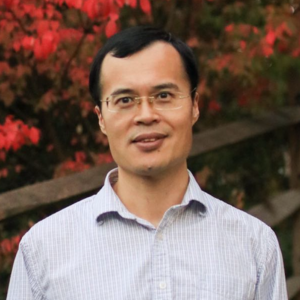
Yiping Qi
University of Maryland, USA
Professor College of Agriculture and Natural Resources
University of Maryland, USA
Qi lab is working at the forefront of plant genome engineering and synthetic biology and is interested in developing and applying genome engineering tools in plants. First, he uses these new genetic tools to answer some basic questions in plant immunity and resilience under stressful environments. Second, he applies multiplex genome editing tools to accelerate crop breeding and de novo crop domestication to make high-yielding, more nutritious, and disease-resistant crops. Third, he emplois CRISPR activation (CRISPRa) and CRISPR interference (CRISPRi) for engineering metabolic pathways, rewiring plant immune responses, and developing synthetic switches in plants toward engineering better crops.
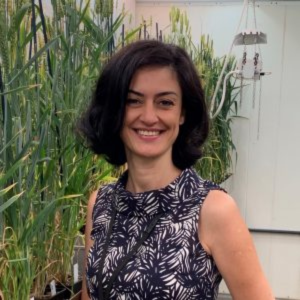
Sadiye Hayta
John Innes Center, Norwich, UK
Sadiye leads the
Wheat Transformation platform at the John Innes Centre, where she provides tailored plant transformation and gene-editing services to both internal and external researchers. Her primary research focus is the development of innovative transformation and genome-editing technologies tailored to wheat research needs.
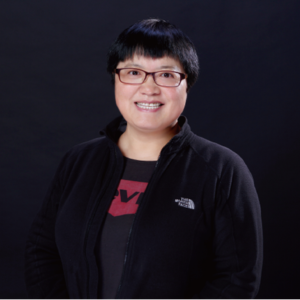
Caixia Gao
CAS, China
Principal Investigator
Institute of Genetics and Developmental Biology
Chinese Academy of Sciences.
Her research group focuses on developing precision genome editing technologies and establishing foundational methods on using genome editing to breed for new and sustainable crops. She has developed new crops that are more nutritious, disease resistant, and stress tolerant.

Zachary Lippman
CSH, USA
Cold Spring Harbor Laboratory (CSHL), USA
HHMI Investigator best known for his pioneering use of CRISPR genome editing to transform agriculture. His work focuses on “tuning” plant genes to control traits like flower production, fruit size, and plant architecture to improve crop yields

Holger Puchta
Director of the Joseph Gottlieb Kölreuter Institute for Plant Sciences at the Karlsruhe Institute of Technology (KIT)
Global pioneer in plant genome editing, is best known for being the first scientist to demonstrate in 1993 that site-specific nucleases could be used to induce controlled changes in plant genomes. His group has moved “beyond the gene” to manipulate the structure of chromosomes. They have successfully achieved heritable inversions, translocations, and chromosome fusions using CRISPR-Cas systems.

Mario Pezzotti
University of Verona/ Edivite, Italy Internationally recognized for pioneering DNA-free genome editing in grapevine, he led the first authorized field trial of a genome-edited grapevine in Europe. His research aims to translate advances in plant genomics and genome editing into new grapevine varieties with enhanced disease resistance and resilience. His vision is to see NGT improved grapevines cultivated worldwide as a key driver of sustainable viticulture and reduced dependence on chemical plant protection products.

Tim Van den Buckle
Tim Van den Buckle is Head of AI at Rainbow Crops, specializing in the application of artificial intelligence, machine learning, and computational biology to crop improvement. His work focuses on AI-driven trait discovery and the identification of genetic targets for next-generation breeding and genome editing.